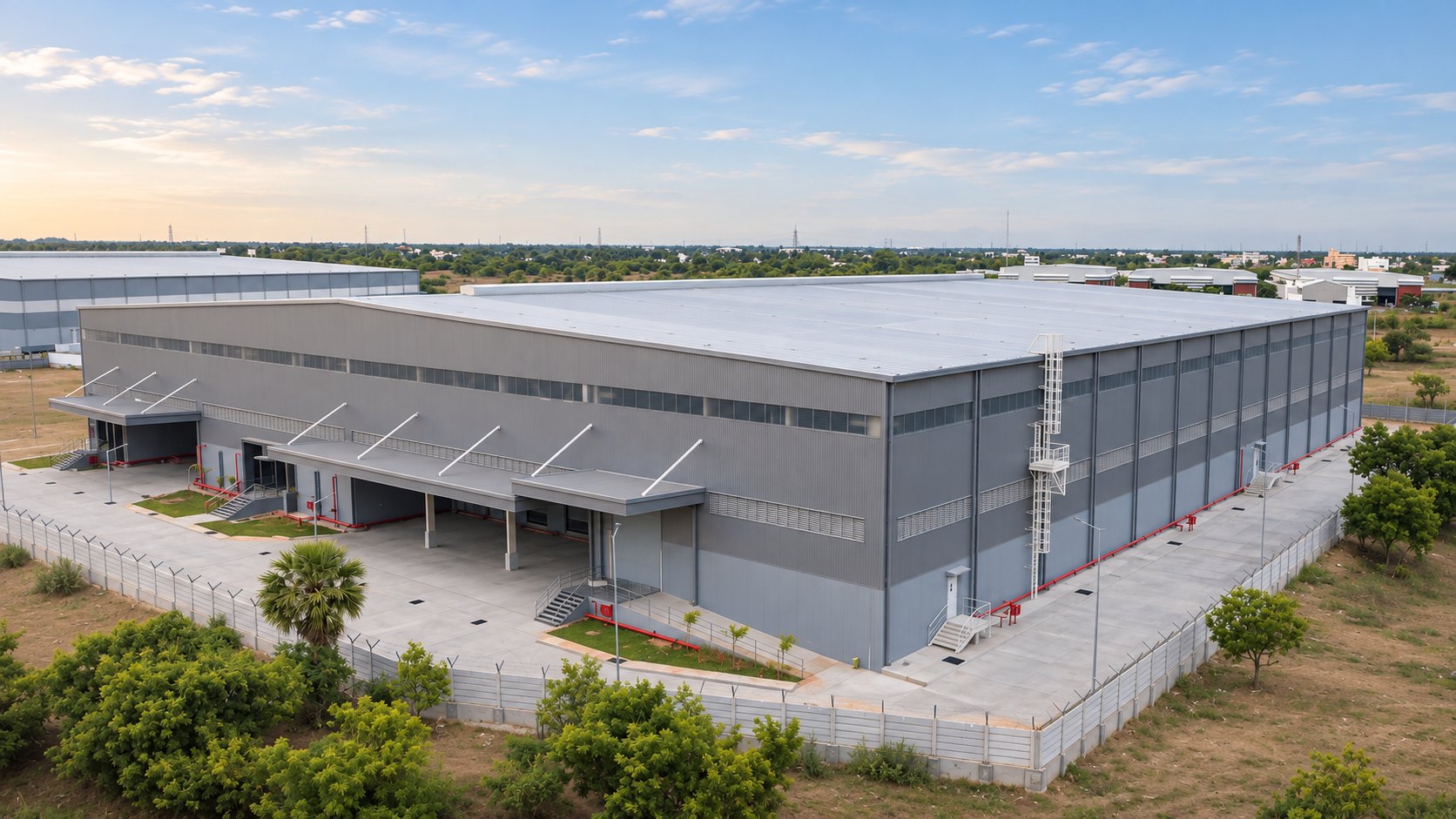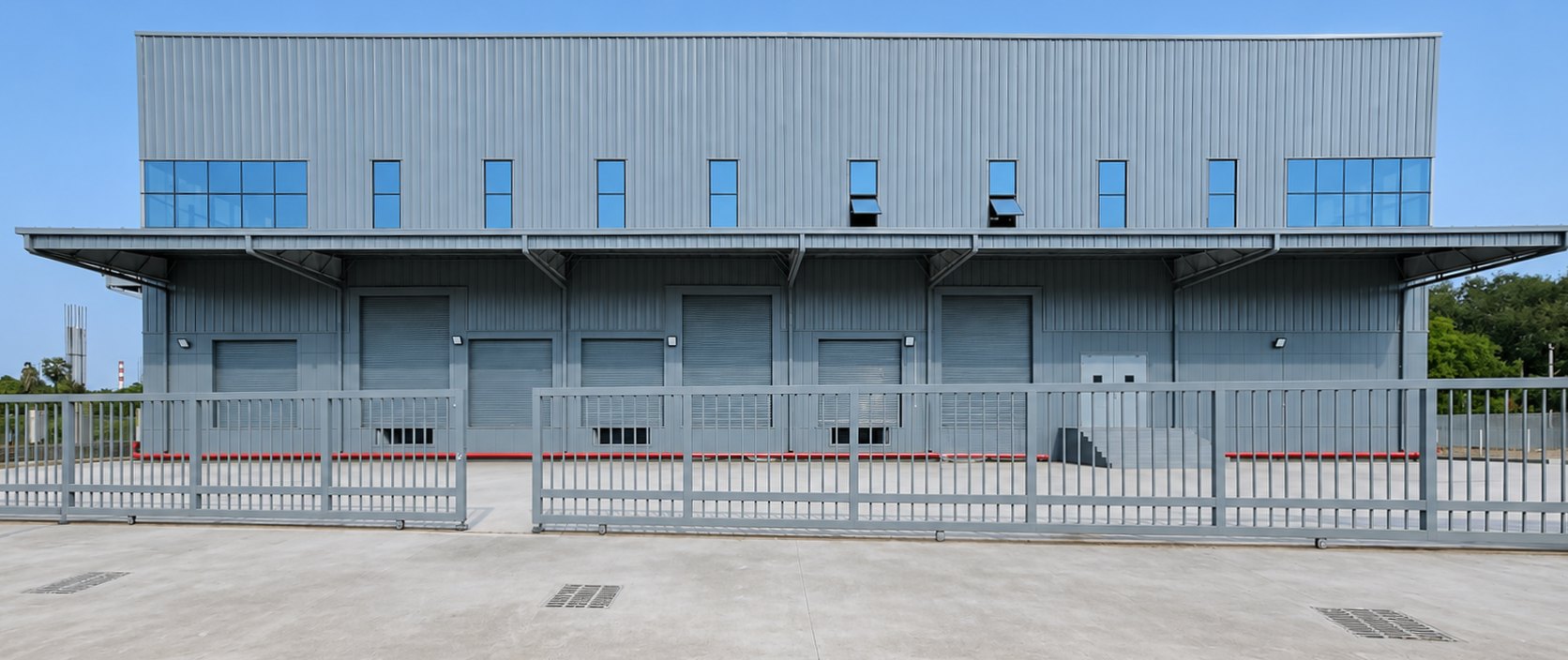
A building can look right on a site visit and still be missing the paperwork that decides whether you can operate in it. Use this checklist before you sign an industrial lease in Tamil Nadu.
1. Title and ownership
- Title documents showing a clear chain of ownership
- Confirmation that the land is classified for industrial use
- An encumbrance certificate, and details of any mortgage on the property
- The landlord's authority to lease, if the owner is a company or partnership
2. Building approvals
- Planning permission and approved building plan from the planning authority (DTCP or CMDA, depending on location)
- Completion certificate, where applicable
- Structural stability certificate
- As-built drawings that match the building you see
3. Fire and safety
- Fire NOC from the Tamil Nadu Fire and Rescue Services
- Details of the fire system: hydrants, sprinklers, tank capacity and pumps
- Confirmation that the system suits the materials and process you plan to run
4. Pollution control consents
Most manufacturing needs two consents from the Tamil Nadu Pollution Control Board (TNPCB):
- Consent to Establish (CTE), before you set up
- Consent to Operate (CTO), before you start production
These are specific to your operation, so you will usually apply in your own name. Ask what the landlord already holds for the building, such as consents for the generator and sewage treatment plant, and what support they give for yours.
5. Power and utilities
- Sanctioned electrical load, in writing
- Generator backup and its approvals
- Water source and capacity
- Sewage treatment and drainage
See our guide to factory power in Tamil Nadu for the questions to ask.
6. Factory licence
If your operation is a factory under the Factories Act, you need plan approval and a licence from the Directorate of Industrial Safety and Health. Check that the building's layout will support your application.
7. What to check on the site visit
- Floor: ask for the flatness and load test report, and look for cracks.
- Docks: count them and watch a truck turn.
- Clear height: measure to the lowest point, not the ridge.
- Roof: look for leaks and check the skylights and ventilators.
- Access road: check its width and condition in wet weather.
- Neighbours: note what is made next door and how trucks queue.
8. Lease terms to settle
- Term and lock-in period
- Rent, escalation and maintenance charges
- Security deposit, typically six months of rent
- Who pays for stamp duty and registration
- Fit-out approvals and how quickly they are given
- Handover condition and date, and what happens if it slips
- Reinstatement obligations at the end of the lease
A simple test
How quickly a landlord hands over these documents tells you as much as the documents themselves. A developer who keeps them in order will have them ready within days.
At Aruna Industrial Parks, approvals and as-built records are in place for every building before handover. See our parks or ask us for the document list for a specific building.
Common questions
What is the difference between CTE and CTO?
Consent to Establish is obtained before setting up a unit. Consent to Operate is obtained before production starts. Both are issued by the TNPCB.
Who applies for the Fire NOC, landlord or tenant?
The landlord normally obtains it for the building. A tenant may need additional clearance if the process or materials carry a higher fire risk.
Does an industrial lease need to be registered?
A lease for more than a year must be registered, with stamp duty paid.
This checklist is general guidance and not legal advice. Have your lawyer review title and the lease.